FeaturesGrowForms & submissions
Forms that collect, qualify and hand off every lead
Build forms from native fields on the canvas — single or multi-step, with conditional logic and a designed success state. Every submission lands in an inbox in WordPress with its status, notes and the actions that ran. Send it on to your CRM, email platform, spreadsheet or chat with 20 integrations, webhooks or REST API calls.
- 17 field types, steps, groups with logic and 11 templates
- A submissions inbox with statuses, notes, search and export
- 20 integrations plus webhooks and REST API calls
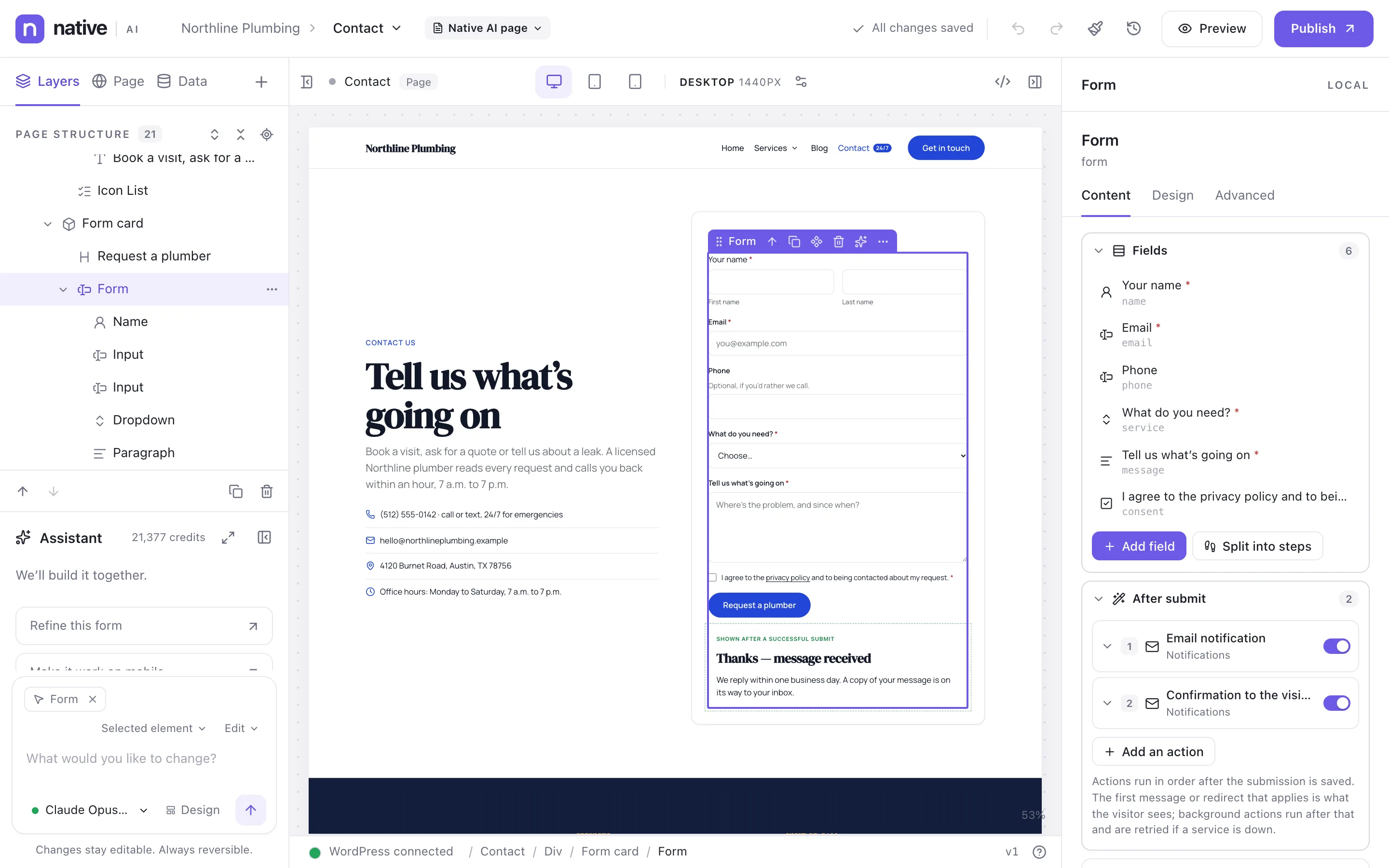
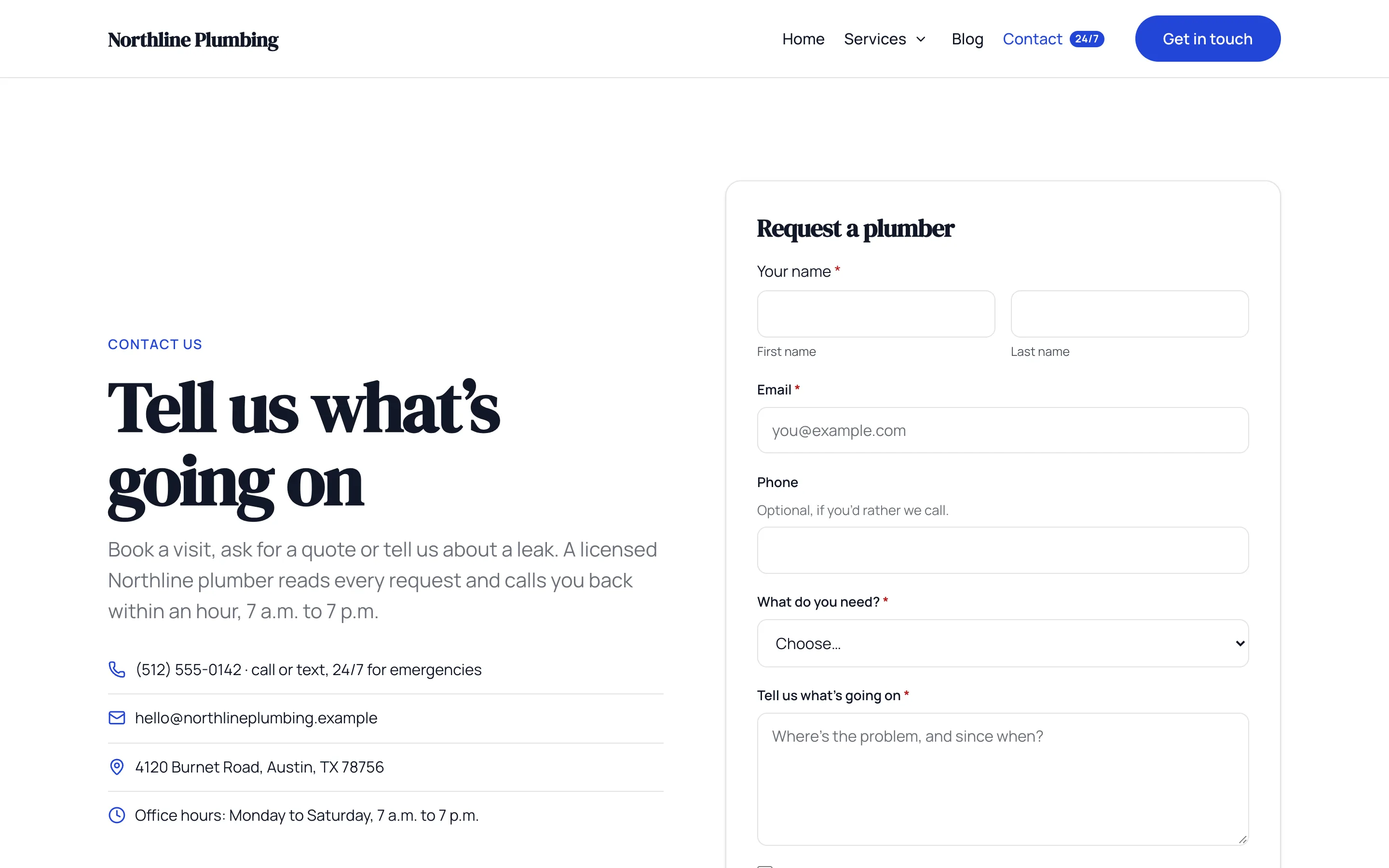
Designed like the rest of the page
Forms are made of elements, so they take your design system and you can style every field. Start from a template — contact, lead generation, newsletter, quote request, job application, event registration, support, booking, multi-step lead, user registration, post submission — or add fields one by one.
Fields: text, email, phone, number, dates, name, address, choices (radio and checkboxes), dropdowns, long text, file uploads, signatures, ratings, ranges, consent, hidden fields and CAPTCHA.
- 11 templates
- Multi-step forms with progress
- Groups shown or hidden by conditional logic
- A success state you design
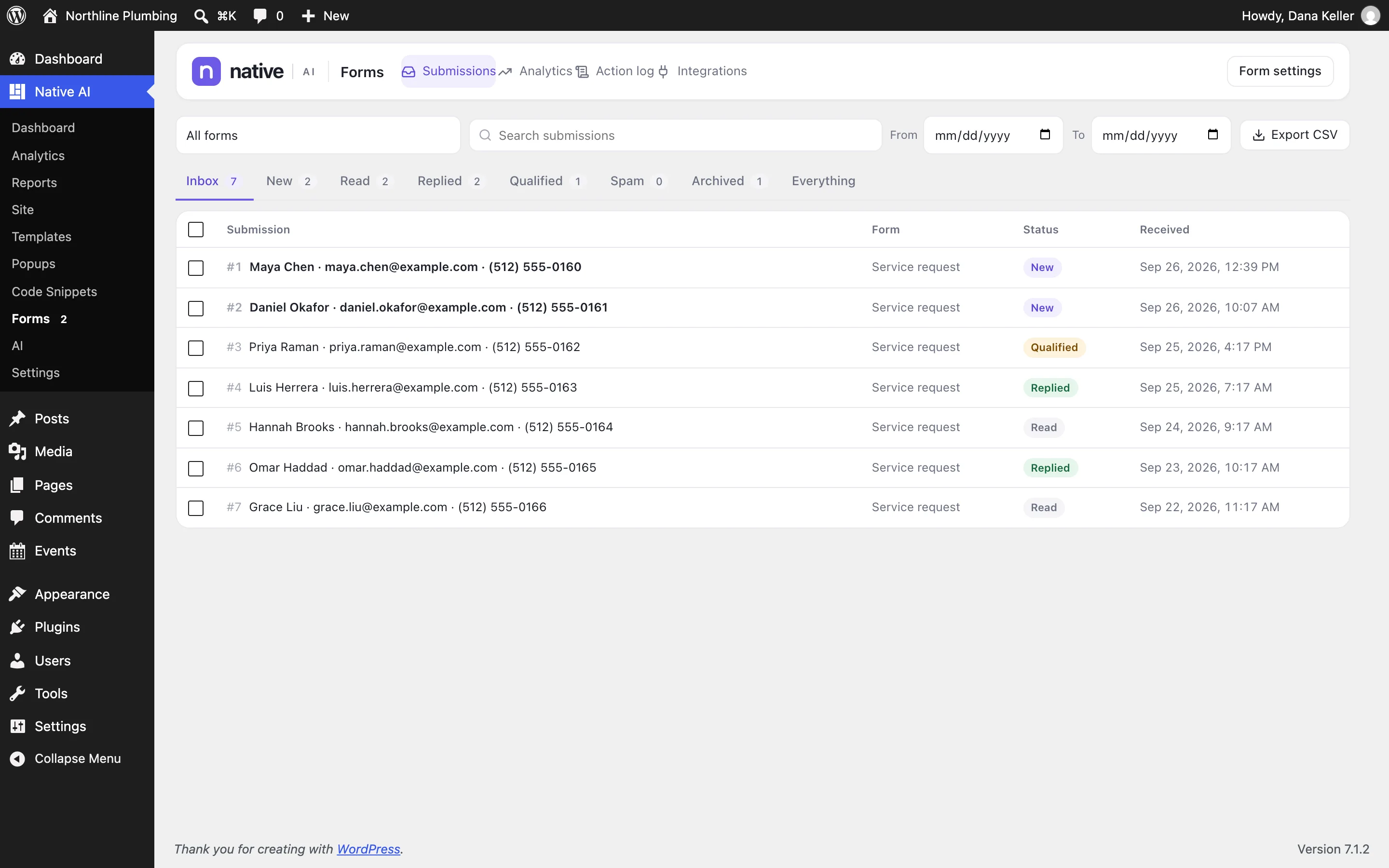
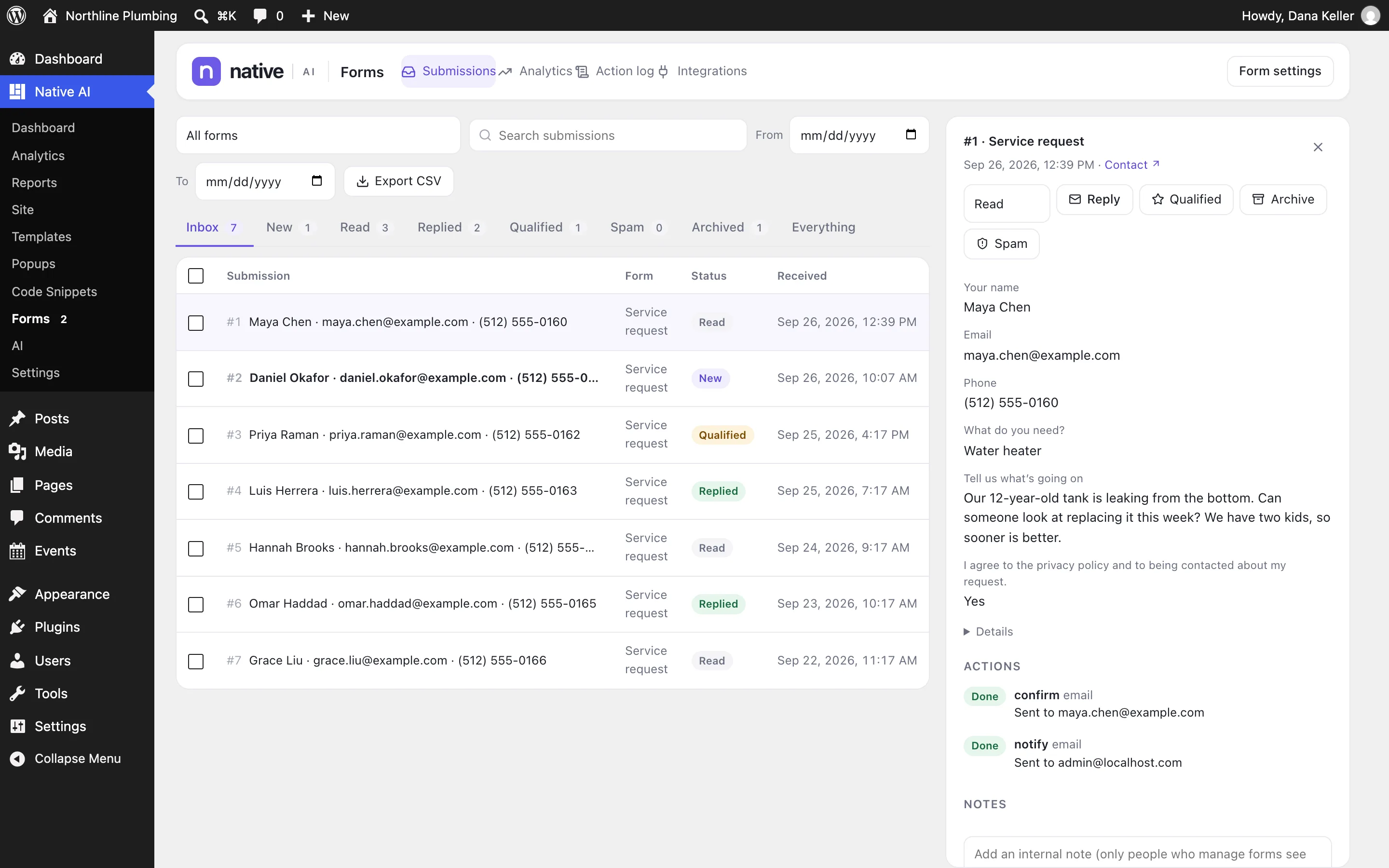
An inbox in WordPress
Native WP AI → Forms keeps every submission with its status — new, read, replied, qualified, spam, archived — the page it came from, and every field. Search, filter by form and dates, export to CSV, add notes for your team, and see each action that ran after the submission, with a way to retry.
- Statuses, notes and bulk actions
- Search, date filters and CSV export
- Action log with retries
- Private file uploads
Connected to the tools you use
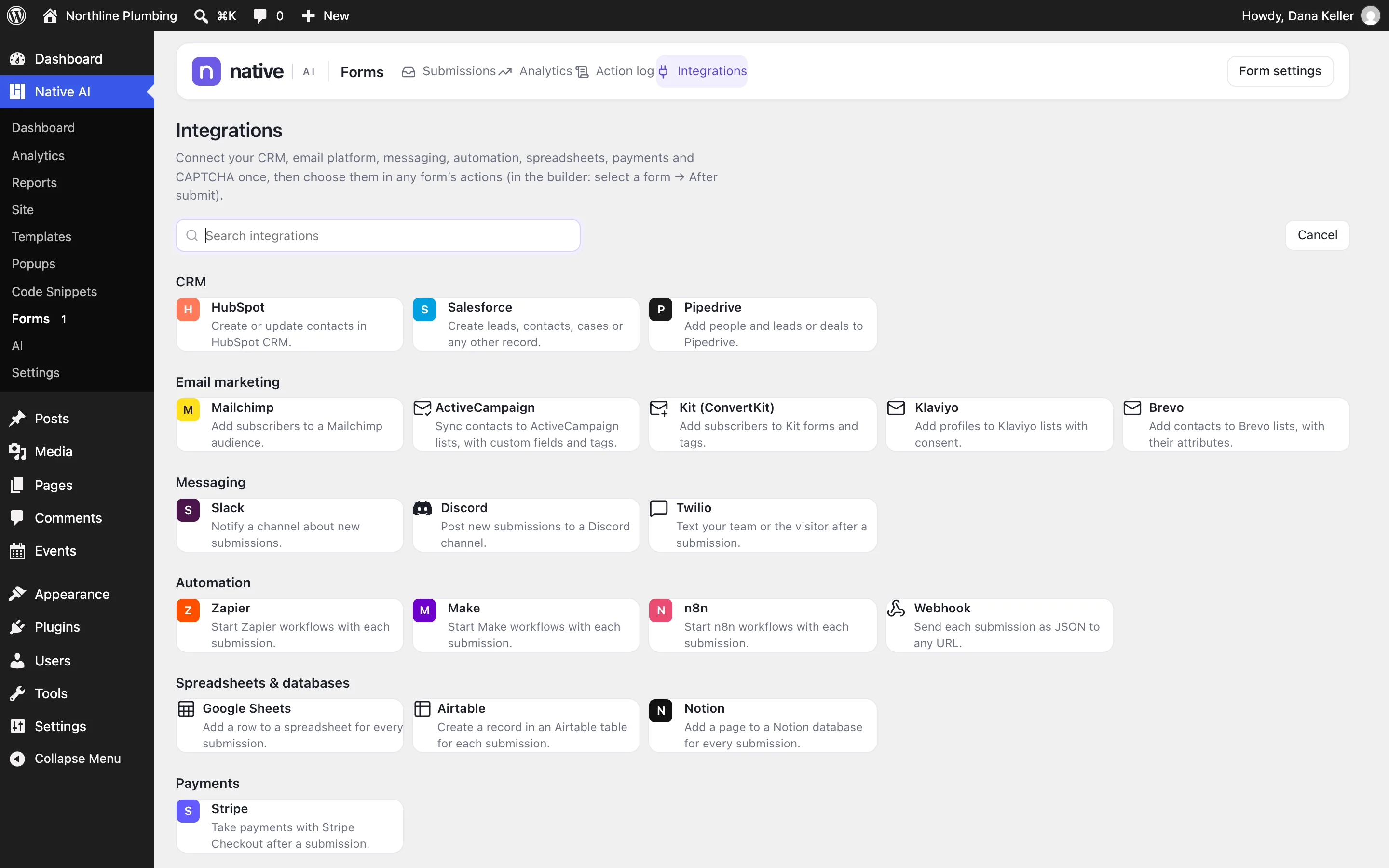
After a submission is saved, its actions run in order: email notifications and confirmations, a message or redirect for the visitor, and integrations. Connect a tool once in Forms → Integrations and use it in any form.
Credentials stay encrypted in WordPress and are never shown again or sent to the AI. A failing integration never loses the submission: it’s stored first, and background actions are retried.
- CRM: HubSpot, Salesforce, Pipedrive
- Email marketing: Mailchimp, ActiveCampaign, Kit, Klaviyo, Brevo
- Messaging: Slack, Discord, Twilio
- Automation: Zapier, Make, n8n, webhooks
- Data: Google Sheets, Airtable, Notion
- Payments: Stripe · CAPTCHA: reCAPTCHA, Turnstile
Spam stays out, and you see what works
A hidden honeypot field, a minimum time to fill in the form, per-visitor rate limits, WordPress’s disallowed words, a limit on links, Akismet when it’s active and CAPTCHA when you want it. Spam is kept for review, not deleted.
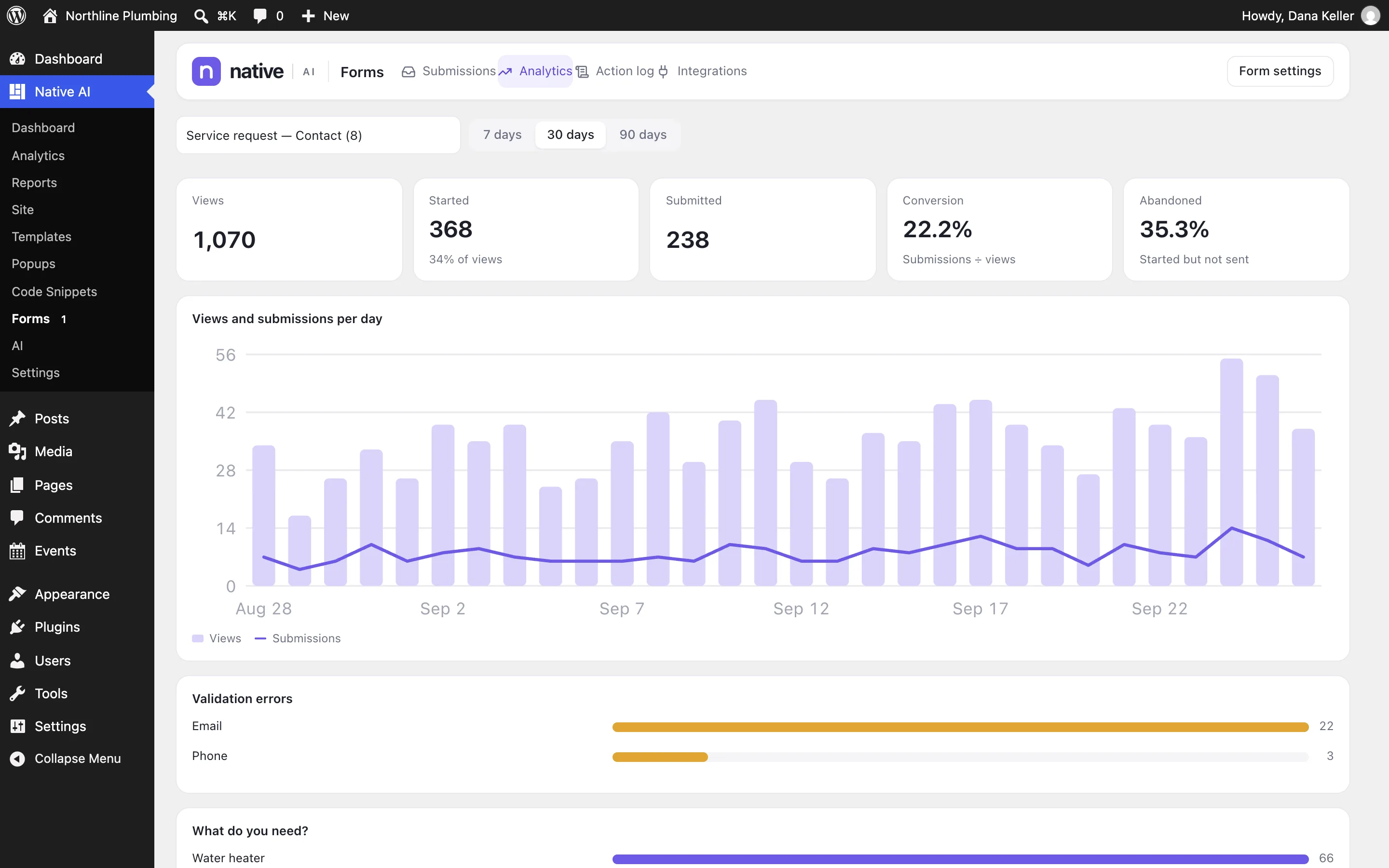
Form analytics show views, starts, submissions, the conversion rate, how many people abandon the form, which fields cause validation errors, and how people answered choice questions.
- Honeypot, timing, rate limits, disallowed words, link limits, Akismet, CAPTCHA
- Views, starts, submissions, conversion and abandonment
- Validation errors by field; answers to choice questions
Forms & submissionsEverything included
Everything in forms & submissions
Building
- 17 field types
- Multi-step forms
- Conditional logic on fields and groups
- 11 templates
- Designed success state
- Dynamic data in defaults and hidden fields
After submit
- Email notifications and confirmations
- Messages and redirects
- Webhooks and REST API calls
- 20 integrations
- Stripe payments
- Actions run in order, background actions retried
Inbox
- Statuses, notes, search, filters
- CSV export
- Action log with retries
- Private file uploads
- Retention: delete after a number of days
- IP addresses not stored unless you choose
Protection
- Honeypot and minimum time
- Rate limits per visitor
- Disallowed words and link limits
- Akismet and CAPTCHA (reCAPTCHA, Turnstile)
Questions about forms & submissions
Are submissions stored if an email fails?
Yes. A submission is saved before any action runs, so a failing email or integration never loses it. The action log shows what failed, and you can retry.
Can I use forms inside popups?
Yes. Forms work anywhere, including popups; a popup can stop showing once its form is sent.
Forms & submissionsKnowledge base
How to use it
Step-by-step articles, settings and answers in the knowledge base.
- Build a formBuild forms from native fields on the canvas — single or multi-step, with logic, a designed success state and actions that run after a submission.
- Form fieldsEvery kind of field — text, email, phone, dates, choices, files, signatures, ratings and more — with validation, defaults and their own messages.
- Conditional logic and multi-step formsShow, hide, require or fill fields depending on the answers, split long forms into steps with progress, and run actions only when conditions match.
- What happens after a submitAfter a submission is saved, its actions run in order: emails, a message or redirect, webhooks, WordPress posts or users, and integrations — with conditions, retries and tags.
- Form integrationsConnect your CRM, email platform, spreadsheet, chat or automation tool once, then send any form’s submissions there — with credentials encrypted in WordPress.
- Submissions and form analyticsEvery submission lands in an inbox in WordPress with its status, notes, files and the actions that ran — and form analytics show where people drop off.
- Spam protectionHoneypot, timing, rate limits, disallowed words, link limits, Akismet and CAPTCHA keep spam out — and spam is kept for review instead of deleted.
- Goals, events and campaignsCount what matters as conversions — a form sent, an important click, a thank-you page, a popup converting — track clicks without code, and tag campaign links.
Works well with
“Build a website for my plumbing business in Austin.”
Plans the pages and writes them in a look of their own, with a header, footer, templates and a design system you can edit.
“Make every button on the site pill-shaped.”
Finds the shared class behind every button, shows you the plan, then changes it once.
“Write meta descriptions for every page that doesn’t have one.”
Writes them from each page’s own words in a background job, shows the credits first, and puts each one beside its page for you to approve.
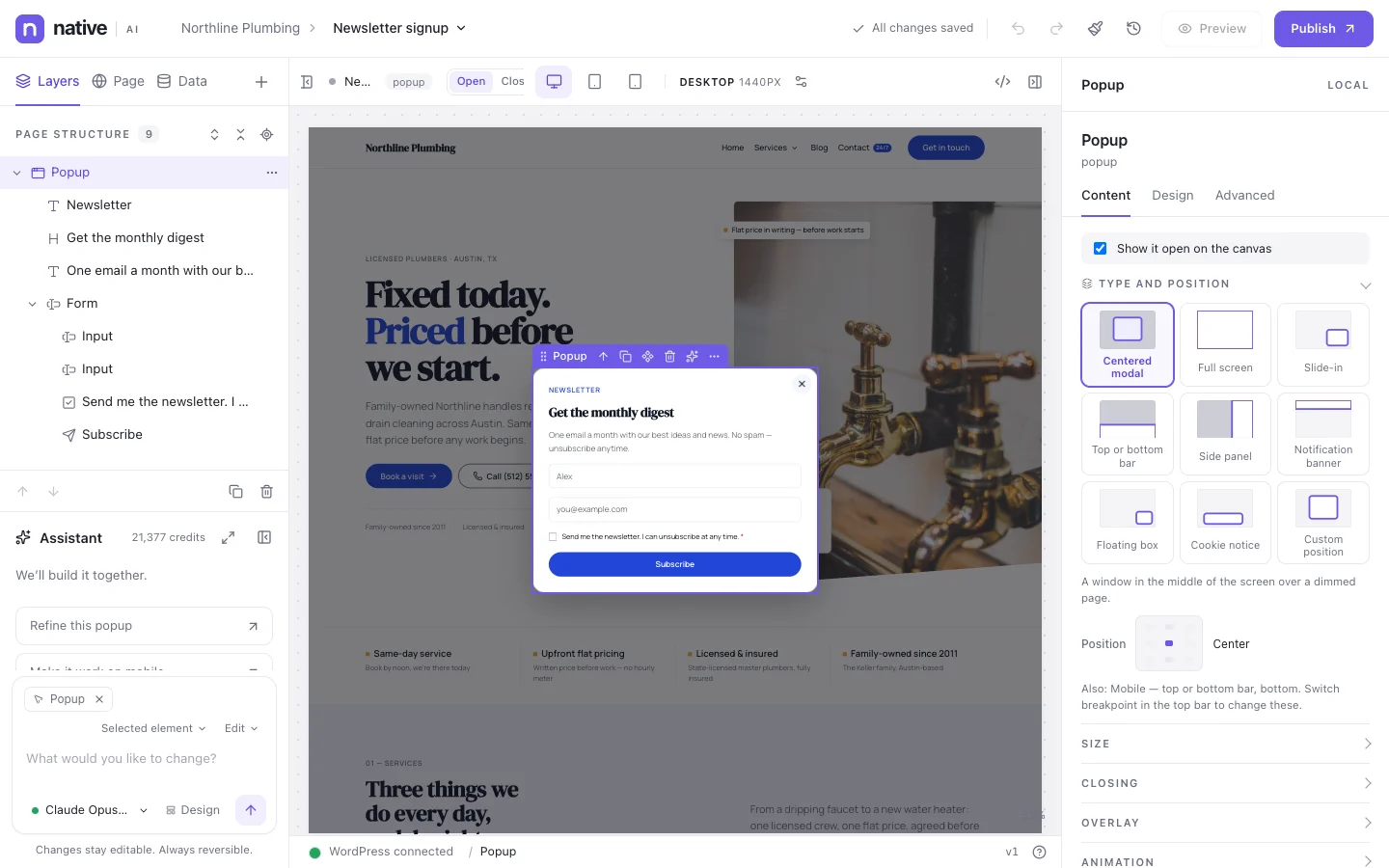
“Add an exit-intent popup offering a free consultation.”
A native popup with its trigger and how often it shows. It starts as a draft.
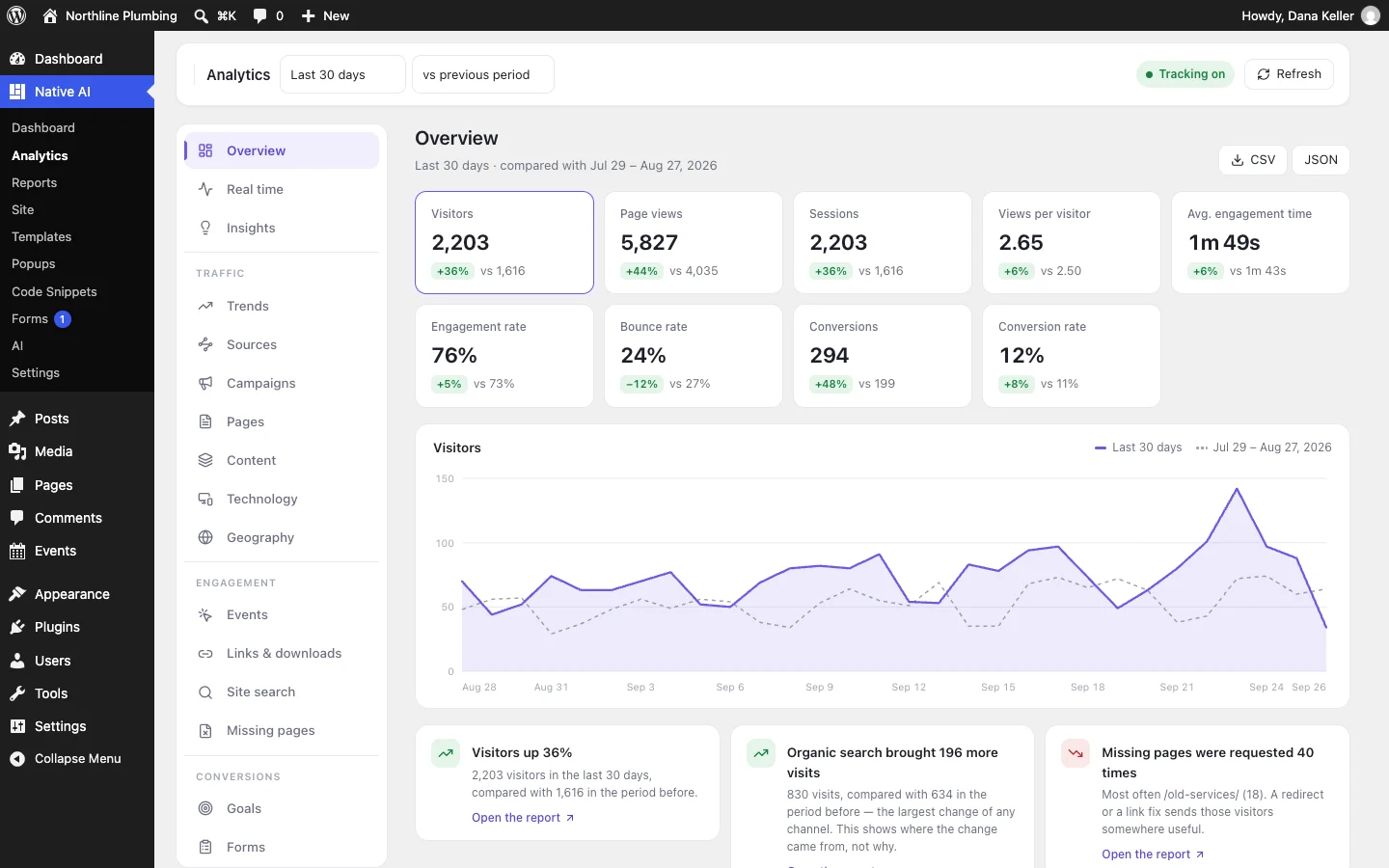
“Which pages lost visitors this month?”
Compares this month with last, page by page, and checks recent changes to those pages.
“Find unfulfilled orders.”
Lists the paid orders waiting to ship, oldest first.
“Write a six-lesson course on home budgeting with a quiz after each lesson.”
Writes the outline, every lesson and the quizzes as drafts for you to review, and sets who can take it.
“Why was a customer locked out this morning?”
Reads the security log, finds the lockout and its address, and can unblock it for you.
“Which plugins need updates?”
Lists the installed plugins and the ones with an update waiting.
“Use the color scheme of this website: https://…”
Opens the site, reads the colors and fonts it uses most, and sets your design system from them.
“Create a Services post type with Price and Duration fields.”
Its own menu in WordPress and custom fields — in ACF when it’s active — ready for a template.
“Add the prices from this PDF to the Services page.”
Reads the attached price list and builds it into the page in your design.
“Count quote requests as a conversion.”
Adds a conversion goal for the form, so Analytics counts every request.
“Show me low-stock products.”
Reads stock from WooCommerce and lists what’s running low or out, with how many are left.
“Refund order 1042 and put the items back in stock.”
Prepares the refund with the amount and how it’s paid back, and waits for your confirmation.
“When someone buys the course bundle, enroll them and tag them in the CRM.”
Builds the automation — the purchase, the enrollment, the CRM tag — as a draft, and asks before switching it on.
“What happened on the site this week?”
Reads the activity record, updates, errors and health checks, and sums them up.
“Add a snippet that turns off comments on pages.”
Writes and checks the code, and saves it as a draft that you switch on.
One plugin. One agent. Your whole site.
Start free: a license for one website and AI credits to build with, no card needed. Describe your business and watch Native WP AI design your home page.